

Employee Rewards sound simple until HR has to actually run the program.
Someone completes a major project. A sales team crosses a target. A team member quietly supports five different departments without making noise about it. Everyone agrees they should be recognised. But then the practical work begins.
Who will approve the reward? What should be given? Is the amount fair? Will it arrive on time? What about employees in other cities? What about remote workers? What happens when one person receives something useful, and another receives something they will never use?
This is where employee rewards management often becomes heavier than it should be. Recognition is meant to create motivation, not another long admin process for HR.
Why Employee Rewards Do Not Always Have To Be Cash
Cash rewards are easy to understand, but they are not always the most memorable form of employee recognition. Once cash enters an employee’s account, it often gets mixed with regular expenses, bills, EMIs, groceries, or savings. It may be useful, but it does not always create a strong emotional recall.
Non-cash rewards work differently. They can make the employee recognition feel more intentional. A dinner experience, shopping voucher, wellness benefit, learning access, travel support, or even a personalised day-off gesture can tell the employee, “We noticed your effort, and we want you to enjoy something because of it.”
That emotional layer matters. Employees do not only remember what they received. They remember how the employee recognition made them feel.
What HR Should Focus On Instead Of Just The Reward Amount
A good HR reward program should not only answer, “How much should we give?” It should answer, “What behaviour are we encouraging?”
For example, different achievements need different kinds of employee recognition. A quarterly sales win may need a performance-linked reward. A work anniversary may need a personal milestone gift. A team collaboration moment may need public appreciation. A high-effort project may need a combination of manager recognition and a flexible reward.
When HR plans out employee rewards around their workforce behaviour, the program becomes more meaningful. Employees understand what the company values. Managers also get a clearer framework for recognising people fairly.
The Problem With Manual Reward Processes
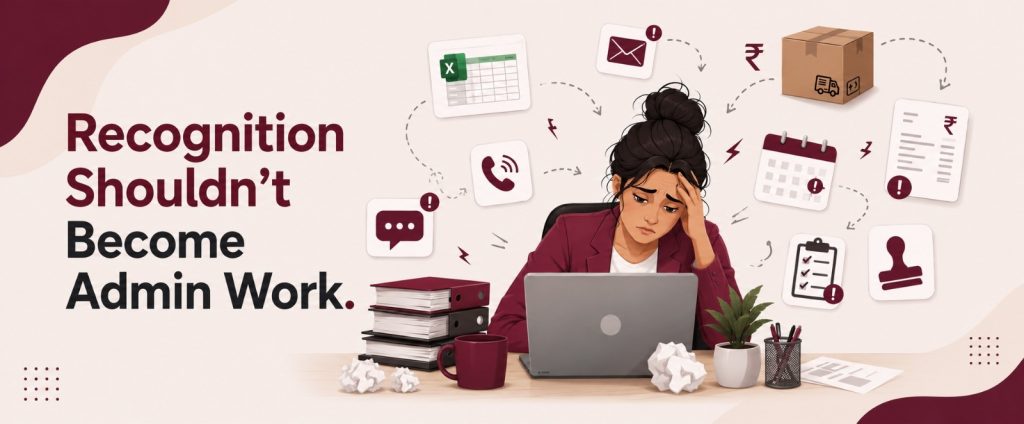
Many R&R programs become difficult because they depend too much on manual coordination.
HR may have to collect addresses, follow up with vendors, maintain spreadsheets, check delivery status, resolve complaints, manage invoices, and still answer employees asking when their reward will arrive. During festive seasons or large recognition cycles, this can quickly become stressful.
The issue is not recognition itself. The issue is the process around recognition.
A reward program should be easy enough to run repeatedly. If every campaign needs fresh coordination from scratch, HR eventually starts limiting recognition to only the biggest occasions. That is when smaller, everyday moments of appreciation get missed.
How To Reduce Operational Pressure In R&R Programs
The first step is to standardise the reward framework.
HR can create clear reward categories such as spot recognition, milestone rewards, performance rewards, festive gifting, peer appreciation, and leadership awards. Each category can have its own budget range, approval flow, and delivery method.
This reduces confusion for managers and prevents HR from handling every request as a new case.
The second step is to offer flexibility. Instead of choosing one gift for everyone, HR can give employees options within a defined reward value. This keeps the experience personal without increasing manual work.
The third step is to make the distribution simple. Digital-based voucher rewards, employee gifting platforms, or automated reward dashboards can help HR deliver recognition faster, especially across different locations and remote teams.
The fourth step is to track everything in one place. HR should be able to see who was rewarded, why they were rewarded, what value was issued, and whether the reward was delivered or used. This makes the program easier to manage and easier to report.
Why Choice Often Works Better Than A Fixed Gift
A fixed gift assumes everyone wants the same thing. But employees have different lifestyles, age groups, locations, family needs, and spending priorities.
One employee may value food delivery. Another may prefer fashion. Someone else may use the reward for groceries, travel, electronics, wellness, or entertainment. When employees get the freedom to choose, the reward feels more useful.
Choice also helps HR avoid the common problem of gifting something that looks good on paper but has low relevance in real life. A voucher could give employees the flexibility to use the reward where it matters most to them.
Recognition Should Feel Timely
Delayed recognition loses impact.
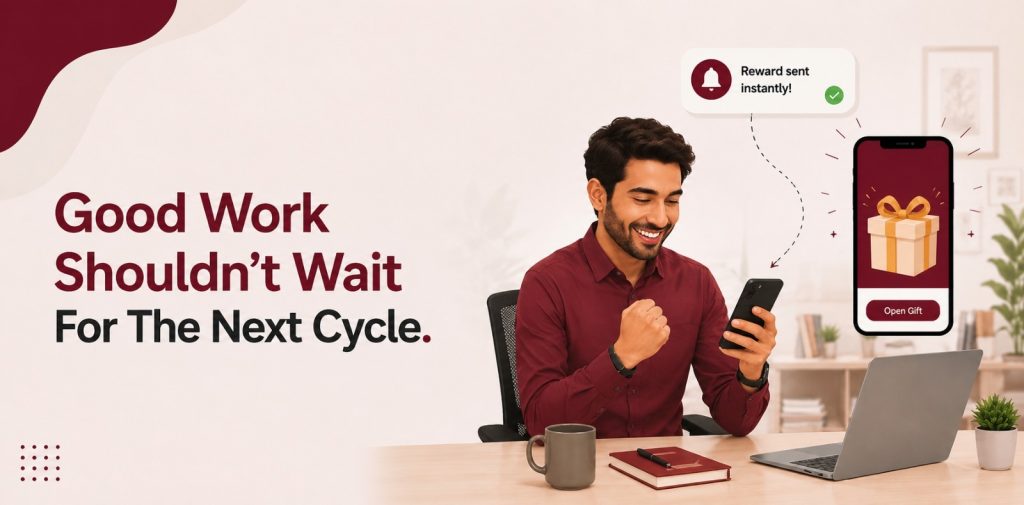
If an employee is rewarded two months after the achievement, the emotional connection becomes weaker. Timely recognition tells employees that their effort was noticed when it mattered.
This is especially important for performance-based recognition. A quick appreciation after a project, campaign, target, or customer win reinforces the behaviour much better than a delayed annual mention.
A Better Way To Think About Employee Rewards
The goal is not to replace cash everywhere. Cash has its place in bonuses, commissions, reimbursements, and salary-linked payouts.
But for everyday recognition, milestone rewards, festive gifting, and performance appreciation, HR can think beyond money. The reward should be easy for HR to manage, useful for employees, and connected to the behaviour being recognised.
A good R&R program does not need to be complicated. It needs to be clear, timely, flexible, and fair. When HR removes unnecessary admin effort from the process, recognition becomes easier to run more often. And when people receive employee rewards that feel relevant to them, appreciation becomes more than a policy. It becomes part of the culture.